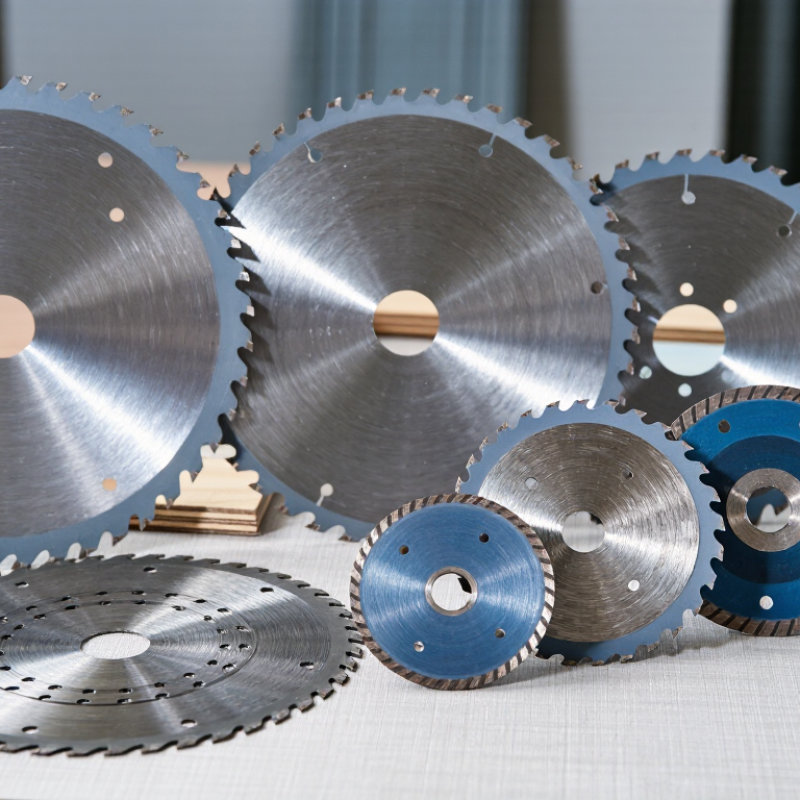
Choosing the right Circular Blades can decide whether a cut feels clean, slow, noisy, or unexpectedly dangerous. A professional buyer should examine the material, machine, blade diameter, arbor size, tooth design, kerf width, and recommended speed. A shiny package is not enough.
Woodworking educator Alex Snodgrass expresses a useful principle: “Choose the blade for the cut, not the machine.” This idea guides our 2026 buying approach. A fine-tooth blade may leave a smoother edge in plywood, while a coarse-tooth blade can move faster through framing lumber. For aluminum, plastic, or composite panels, the tooth geometry and cutting angle need closer attention. Heat marks matter. So do vibration, resin buildup, and missing teeth.
Small details change performance.
This guide compares Circular Blades through practical buying factors, not advertising language. We consider carbide quality, tooth count, expansion slots, coating, noise control, and real cutting conditions. We also examine whether premium blades justify their cost for workshops, contractors, manufacturers, or occasional users. A low-priced blade can sometimes perform well, but that result is not guaranteed. I have seen buyers focus on tooth count and overlook arbor compatibility. That mistake can waste time and damage materials. The guide also recognizes an uncomfortable truth: no blade stays perfect forever. Cleaning, correct storage, and realistic feed pressure still matter. Use the manufacturer’s instructions and suitable protective equipment. A better purchase begins with an honest description of the work.
A circular blade is a toothed cutting disc that spins around a central arbor. Its teeth remove material as the blade moves through wood, metal, plastic, or masonry. The motor supplies rotation, while the tooth shape controls cutting speed, finish, and heat. More teeth usually create smoother cuts, but they can cut more slowly. Fewer teeth remove material quickly and suit rougher work. Blade diameter must match the tool’s guard and rated capacity. The arbor hole must also fit securely.
A practical inspection takes less than a minute. Look for cracked plates, missing teeth, resin buildup, or warped surfaces. I have found that “universal” blades are often convenient, but not always ideal. A blade designed for thin sheet material may perform poorly on dense timber. Cutting results also depend on feed pressure, alignment, and machine condition. Buying the most expensive option does not guarantee the best result. Match the blade to the task, then test it on scrap material. Mistakes happen, especially when material labels are unclear. Recheck the specifications before making a final cut.
2026 Top Circular Blades Buying Guide
Key Blade Types and Their Best-Fit Applications
Choosing a circular blade starts with the material, not the saw. A blade that cuts clean timber may burn through plastic or chip laminate. I have seen operators blame the machine when the tooth design was wrong. Fit matters most.
Carbide-tipped blades suit construction timber, plywood, and general workshop work. More teeth usually produce smoother cuts, while fewer teeth remove material faster. A 24-tooth blade can handle framing lumber efficiently. A 60-tooth version is better for clean cabinet panels. Check the blade diameter, bore size, and maximum rated speed before installation.
Diamond blades are the practical choice for brick, concrete, masonry, and some tiles. Segmented rims help with dusty, aggressive cutting, while continuous rims create cleaner tile edges. Abrasive blades work well on steel, stainless steel, and other metals when matched to the correct cutting machine. They wear quickly, though, and heat can distort thin stock. High-speed steel blades remain useful for selected metalworking tasks, especially where a controlled, slower cut is preferred.
Application details can change the decision. Wet cutting may reduce dust and preserve edge quality, but the equipment must support water safely. Dry cutting is more convenient on smaller jobs, yet overheating becomes easier. I sometimes over-specify tooth count for appearance, then lose cutting speed unnecessarily. That trade-off deserves a realistic look. Inspect chipped teeth, unusual vibration, and burn marks before the blade fails. Proper guards and manufacturer-rated speeds are not optional.
2026 Top Circular Blades Buying Guide?
How to Match Blade Size, Material, and Tooth Design
Choosing a circular blade in 2026 is less about buying the largest option. It is about matching the cut to the machine and material. Measure the saw’s approved diameter, arbor size, kerf range, and maximum speed. A blade that fits physically may still overload the motor. For portable saws, a smaller diameter can improve control. For stationary saws, larger blades may provide deeper cuts. Always confirm these details in the tool and blade manuals.
Match the blade body and cutting edge to the workpiece. Carbide-tipped teeth suit clean cuts in timber, plywood, and many composite panels. Abrasive materials demand a blade designed for them, not a general-purpose wood blade. For aluminum, use a suitable non-ferrous-metal design and follow the recommended lubrication guidance. Thin kerfs waste less material, but they can deflect more easily. I once chose a thin blade for speed and received a slightly wavy edge. That mistake changed my measuring habits.
Tooth design controls finish, speed, and chip removal. More teeth usually produce smoother edges, while fewer teeth clear chips faster in thick stock. Alternate top bevel teeth work well for crosscuts and general woodworking. Flat-top patterns can help with ripping, depending on the material and saw setup. Hook angle also matters. Aggressive geometry may feed quickly but feel harder to control. Inspect tooth wear, missing tips, resin buildup, and vibration before each job. If the cut burns, wanders, or sounds harsh, stop and reassess the match.
The 165–190 mm range is commonly used for portable circular saws. Always match the blade diameter and bore size specified by the saw.
Fewer teeth remove material faster for ripping. More teeth generally produce smoother cuts in plywood, laminate, and hardwood.
Carbide-tipped blades are a practical general choice for wood products. Non-ferrous metal requires a blade specifically designed for aluminum or similar alloys.
The chart shows typical starting-point tooth counts for 165–190 mm circular blades. Actual selection should also consider cutting depth, feed rate, kerf, hook angle, and the saw manufacturer's specifications.
2026 Top Circular Blades Buying Guide: Safety Standards, Compatibility Checks, and Maintenance Needs
A safe circular blade starts with the machine, not the cutting material. OSHA standard 29 CFR 1910.213 requires suitable guarding, secure mounting, and safe operating controls for woodworking machinery. HSE’s 2023/24 workplace statistics recorded about 604,000 self-reported non-fatal injuries in Great Britain. That figure is not blade-specific, but it shows why small checks matter.
Check the arbor diameter, blade diameter, kerf width, tooth design, and maximum RPM. Never fit a blade with a smaller speed rating than the saw. For example, a 7,000-RPM saw needs a blade rated above 7,000 RPM. Confirm the blade matches wood, metal, laminate, or composite materials. A tooth pattern designed for clean timber cuts may overheat on dense boards. Compatibility is easy to overlook.
Inspect before every use. Look for cracked teeth, warped plates, missing carbide, resin buildup, and unusual discoloration. Stop immediately if vibration increases. Clean the blade with a suitable non-corrosive cleaner, then dry it completely. Store blades upright, separated by cardboard or protective sleeves. In practical inspections, users often replace a dull blade too late. I have seen heat marks blamed on the motor, when clogged teeth caused the problem. That assumption deserves review. The European Agency for Safety and Health at Work also emphasizes preventive maintenance and worker training as core risk controls. Safety depends on habits, not packaging claims.
| Blade Category | Common Cutting Material | Typical Tooth Configuration | Compatibility Checks | Key Safety Requirements | Maintenance Needs | Replacement Indicators |
|---|---|---|---|---|---|---|
| General-Purpose Carbide-Tipped Blade | Softwood, hardwood, plywood, and common construction lumber | Medium tooth count with alternating bevel teeth; commonly designed for balanced speed and finish | Confirm the blade diameter, arbor-hole diameter, kerf width, maximum rated revolutions per minute, and saw guard clearance. | Use only on a saw whose rated speed does not exceed the blade's maximum RPM. Keep the upper and lower guards functional and secure the workpiece before cutting. | Remove resin and dust after use. Inspect carbide tips, plate flatness, gullets, and expansion slots before each demanding job. | Missing or cracked teeth, excessive vibration, burning, repeated binding, or a cut that remains rough after proper alignment. |
| Fine-Finish Crosscut Blade | Hardwood, veneered panels, melamine-faced board, and trim materials | Higher tooth count with alternating bevel geometry for cleaner crosscuts | Check that the tooth count and hook angle suit the material. Verify the saw can safely operate with the blade's diameter and kerf. | Use a stable feed rate and appropriate support to reduce chipping. Do not force the blade through the workpiece or cut materials outside its stated application. | Clean pitch buildup promptly. Store in a dry protective holder so the teeth do not contact other blades or metal tools. | Chipped edges, increased tear-out, visible tooth damage, overheating marks, or a noticeable loss of cutting efficiency. |
| Ripping Blade | Solid wood cut along the grain | Lower tooth count with larger gullets to clear chips during fast grain-direction cuts | Confirm that the blade is approved for the specific saw type and that the kerf matches the riving knife or splitter where fitted. | Use a riving knife or splitter when required by the saw design. Maintain firm stock control and stand out of the potential kickback path. | Clear packed chips from gullets. Check for resin, tooth wear, plate distortion, and correct alignment with the saw's fence or guide. | Frequent tooth clogging, burning despite correct feed pressure, kickback tendency, or visible distortion of the blade plate. |
| Thin-Kerf Blade | Portable saw applications, thinner wood stock, and situations where reduced material waste is useful | Reduced kerf with tooth geometry matched to lower material removal | Verify that the blade is specifically rated for the saw. Check that the riving knife or splitter is compatible with the thinner kerf. | Do not use a thin-kerf blade with a misaligned or excessively thick splitter. Watch for deflection and avoid twisting the blade during a cut. | Inspect more frequently for side wobble, heat discoloration, and tooth damage. Keep the blade clean and properly supported during storage. | Side-to-side movement, inconsistent kerf width, increased vibration, overheating, or repeated binding in otherwise suitable material. |
| Non-Ferrous Metal Cutting Blade | Aluminum, copper, brass, and other approved non-ferrous metals | Specialized carbide geometry, often with a negative or low hook angle and chip-clearance design | Confirm that the blade is rated for the exact metal and saw type. Check diameter, arbor, kerf, RPM, tooth geometry, and guard compatibility. | Follow the tool manufacturer's requirements for clamping and work support. Use eye and hearing protection and keep combustible debris away from hot chips. | Remove aluminum and metal residue using an approved cleaning method. Inspect teeth for impact damage and check that no chips are trapped in the gullets. | Tooth fractures, severe loading, melted residue, abnormal noise, excessive heat, or a cut that pulls the workpiece unexpectedly. |
| Fiber-Cement and Abrasive-Material Blade | Fiber-cement board and other specifically approved abrasive sheet materials | Specialized carbide or polycrystalline diamond-tipped design, depending on the material and application | Verify explicit material approval, machine compatibility, blade diameter, arbor size, maximum RPM, and dust-control requirements. | Use suitable respiratory protection and dust extraction. Avoid dry cutting unless the blade and work method are designed for it. Follow local occupational dust-control rules. | Clean dust from the blade and saw. Inspect the cutting edge, body, mounting hole, and guard before every use because abrasive dust accelerates wear. | Rapidly reduced cutting speed, excessive dust generation, missing segments or tips, vibration, or visible damage to the blade body. |
| Diamond-Tipped Masonry Blade | Concrete products, brick, masonry, stone, and other materials specifically listed by the blade manufacturer | Segmented, continuous-rim, or turbo-rim construction selected according to the required finish and material | Confirm that the blade is designed for the machine, cutting method, material, diameter, arbor, and maximum operating speed. | Use the correct guard and dust or water-control method. Never exceed the marked RPM. Inspect for cracks, missing segments, or a distorted core before use. | Keep the blade clean and dry after wet cutting. Allow suitable cooling and avoid side loading, twisting, or using the blade as a grinding wheel. | Cracked or warped core, missing segments, uneven wear, excessive vibration, or a cutting edge that no longer performs effectively. |
| Universal Multi-Material Blade | Limited combinations of wood, plastic, laminate, and other materials stated on the blade marking | Mixed tooth geometry intended to provide versatility rather than the best finish in one material | Read the complete application marking. Ensure the blade is not being used for ferrous metal, masonry, or another material outside its approval. | Treat every material change as a compatibility check. Remove embedded metal fasteners unless the blade is specifically rated for them. | Clean between materials to prevent cross-contamination. Check for resin, plastic melting, chipped teeth, and changes in cutting behavior. | Material-specific overheating, melting, heavy chipping, tooth loss, or reduced performance compared with a dedicated blade. |
| Safety and Compliance Checklist | Applies to all circular saw blades | Not applicable | Match blade diameter, arbor, kerf, RPM, tooth orientation, guard clearance, and riving-knife or splitter thickness. Follow the saw and blade instructions. | Relevant requirements may include applicable OSHA rules, the ANSI B7.1 safety code for abrasive wheels where applicable, EN 847-1 for woodworking tooling where applicable, and local regulations. | Inspect before each use; clean after use; store dry and protected; have resharpening performed by a qualified service; discard blades that are cracked, warped, or structurally damaged. | Any crack, bent plate, loose component, missing tooth or segment, illegible safety marking, excessive vibration, or failure of the guard system. |

2026 Top Circular Blades Buying Guide?
How to Compare Circular Blades and Choose the Right One in 2026
Choosing a circular blade starts with the material, not the package label. A 24-tooth blade usually cuts timber quickly and clears chips well. A 60-tooth blade produces cleaner edges in plywood, panels, and trim. More teeth are not always better. They can increase friction, heat, and cutting resistance.
Compare kerf width, tooth geometry, arbor size, maximum RPM, and carbide quality. A thin kerf wastes less material, but it may feel less stable during deep cuts. Hook angle also matters. A positive angle feeds aggressively, while a low or negative angle offers more control on delicate panels. The USDA Forest Service Wood Handbook, 2021, reports that common wood densities vary roughly from 0.3 to 0.8 g/cm³. That range explains why one blade setting cannot suit every species.
Dust control deserves equal attention. OSHA lists permissible exposure limits of 15 mg/m³ for total wood dust and 5 mg/m³ for the respirable fraction. Blade choice affects dust size and direction. Check the extraction port after a test cut. The kerf should remain open, and the motor should not sound strained. I still would not trust tooth count alone. A clean sample cut, measured with a square, reveals more than marketing language. Also inspect the blade after several cuts; small chips or blue heat marks suggest the selection needs reconsideration.