2026 Best Cemented Carbide Round Bars for Industrial Applications?
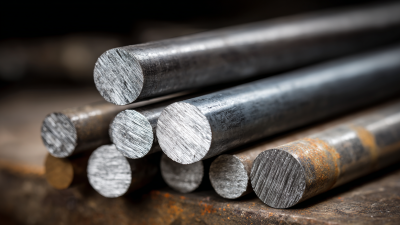
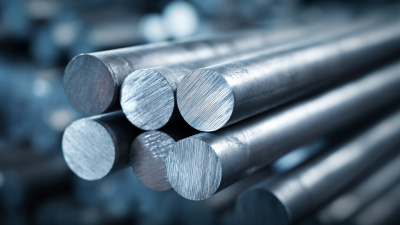
In the rapidly evolving industrial landscape, the demand for high-performance materials is increasing. Cemented Carbide Round Bars stand out due to their exceptional hardness and wear resistance. Industries such as mining, manufacturing, and automotive rely heavily on these materials. Their superior characteristics make them ideal for high-stress applications.
Cemented Carbide Round Bars are not only durable but also versatile. They can be machined to precise dimensions and applied in various settings. However, selecting the right grade can be challenging. Each application has unique requirements that must be met. Users often struggle to balance performance, cost, and availability.
The 2026 Best Cemented Carbide Round Bars will address these challenges. By evaluating leading products, this guide aims to provide clarity. We will explore different manufacturers, specifications, and applications. Our goal is to help readers make informed decisions that enhance productivity and efficiency. In a field as complex as metallurgy, understanding the nuances is crucial.
2026 Overview of Cemented Carbide Round Bars in Industry
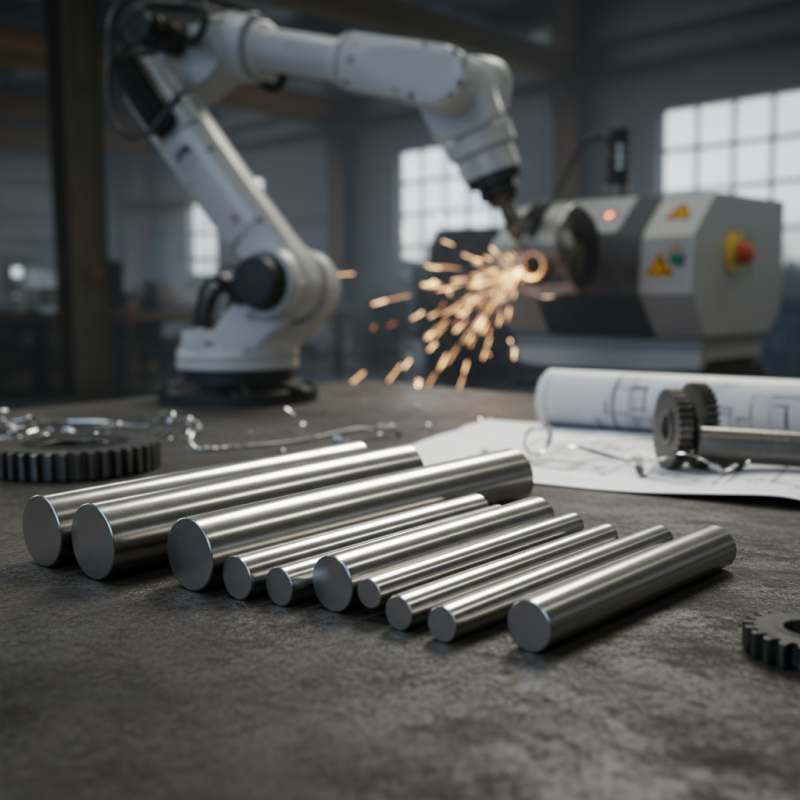
Cemented carbide round bars are vital in various industrial applications. They provide durability and precision in machining processes. These bars are known for their high hardness and resistance to wear. Industries like aerospace, automotive, and manufacturing rely on these materials. The ability to withstand extreme conditions makes them indispensable.
In terms of applications, cemented carbide round bars excel in cutting tools and dies. They help achieve better performance in high-speed operations. Their thermal stability enhances productivity, reducing downtime. However, the production process is not without challenges. Achieving the right composition can be difficult. Small deviations in ingredients can affect the final quality.
Some industries still overlook the potential of cemented carbide round bars. They may prefer traditional materials due to cost or familiarity. It’s essential to recognize the long-term benefits of using these bars. While the initial investment might be higher, the lifespan and performance can justify the choice. This is an area worth exploring further. Understanding the nuances in applications can lead to improved outcomes.
Key Properties of Cemented Carbide for Industrial Applications
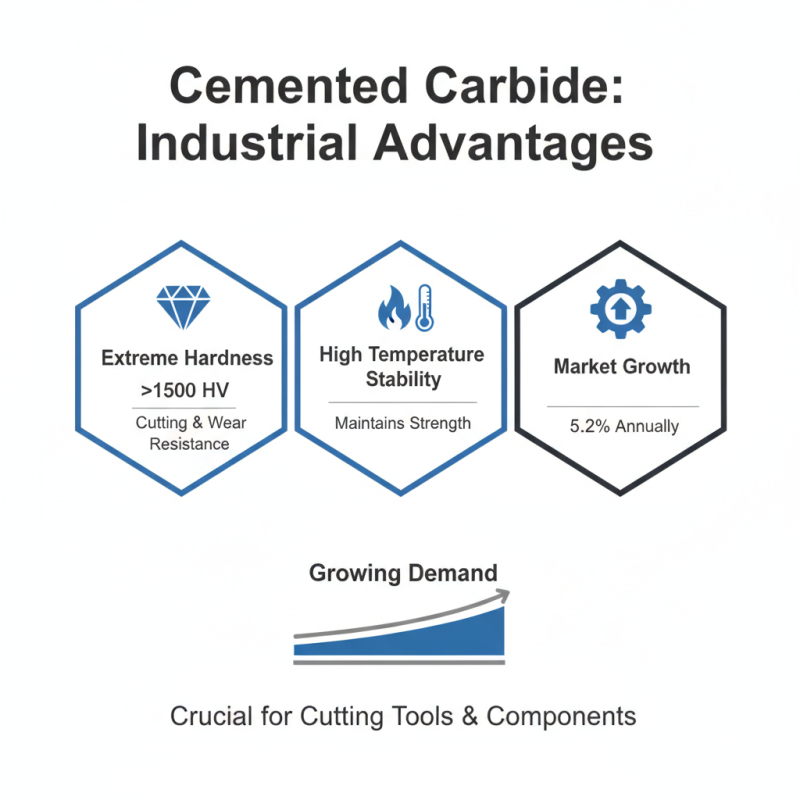
Cemented carbide round bars are crucial in various industrial applications due to their unique properties. These bars exhibit exceptional hardness, often exceeding 1500 HV, which makes them ideal for cutting tools and wear-resistant components. Their ability to withstand high temperatures without significant wear enhances their performance in demanding environments. Reports indicate that the market for cemented carbide is projected to grow by 5.2% annually, a testament to their increasing relevance.
Another vital property is their excellent toughness. Despite their hardness, cemented carbides resist fracture effectively under stress. This quality is essential in drilling and machining applications, where impacts are frequent. Studies show that properly designed carbides can achieve a balance between hardness and toughness, significantly reducing tool failures. Furthermore, their resistance to corrosion contributes to the longevity of tools and components, making them a reliable choice for industries like aerospace and automotive.
However, the production of these materials can be challenging. The right composition and processing techniques are necessary to maximize performance. Variations in material purity or manufacturing methods can lead to inconsistent quality. Ongoing research aims to address these challenges, focusing on innovations in carbide development. Understanding these properties paves the way for better application and design, ensuring that industries can leverage the full potential of cemented carbide round bars.
Top Manufacturers of Cemented Carbide Round Bars in 2026
In 2026, the demand for cemented carbide round bars continues to surge in industrial applications. These materials offer exceptional hardness and wear resistance, making them suitable for cutting tools and machining. Manufacturers are focusing on enhancing these properties through innovative processes. They aim to produce superior products that meet the evolving needs of various industries.
Top manufacturers are developing advanced techniques to improve production efficiency. They are exploring new compositions that enhance toughness while retaining hardness. Some brands invest heavily in research and development to push boundaries. Yet, this rapid progress sometimes leads to oversights in quality control. Ensuring consistent performance remains a challenge for many producers.
Choosing the right manufacturer involves careful evaluation. It’s essential to consider their experience and expertise. Reliable suppliers often provide test results and certifications to prove their claims. However, not all manufacturers disclose comprehensive information. This lack of transparency can lead to missed opportunities or costly mistakes for buyers. Hence, thorough research is crucial when selecting a supplier.
Applications of Cemented Carbide Round Bars in Various Industries
Cemented carbide round bars are vital in various industries. Their unique properties make them ideal for high-performance applications. They offer excellent hardness and wear resistance, making them useful in manufacturing tools and equipment. In industries like aerospace and automotive, these bars withstand extreme conditions. This durability extends tool life, reducing downtime and maintenance.
In metalworking, cemented carbide round bars are indispensable. They are used in cutting tools, drills, and milling machines. Their ability to maintain sharp edges under stress enhances productivity. However, not all applications do not succeed with these bars. Some users may find them brittle under specific conditions, leading to breakage. This limitation requires careful analysis of application needs.
In the oil and gas sector, cemented carbide round bars play a crucial role. They are used in drilling operations. Their resistance to corrosion and wear is highly valued. Complications can arise if the wrong grade is chosen. Understanding this material's properties is essential for effective application. This reflection on their use guides better material selection and optimizes performance.
2026 Best Cemented Carbide Round Bars for Industrial Applications
| Specification |
Typical Applications |
Diameter Range (mm) |
Hardness (HRA) |
Material Composition |
| Cemented Carbide Grade A |
Cutting Tools, Mining Tools |
5 - 50 |
92 - 94 |
WC, Co |
| Cemented Carbide Grade B |
Wear Parts, Aerospace Components |
10 - 100 |
90 - 92 |
WC, Co, TiC |
| Cemented Carbide Grade C |
Stamping Dies, Punches |
8 - 80 |
88 - 90 |
WC, Co, Ni |
Future Trends and Innovations in Cemented Carbide Round Bar Production
The production of cemented carbide round bars is evolving rapidly. This change is driven by the demand for enhanced properties. According to a recent industry report, the global cemented carbide tool market is expected to reach $30 billion by 2026. This growth reflects the increasing use of carbide in machining operations across various sectors.
Innovations in manufacturing processes are defining the future of these materials. New techniques, such as advanced powder metallurgy, are improving material performance. Recent data also suggests that the use of recycled materials in production is gaining traction. Many manufacturers are now exploring sustainable practices. However, quality control remains a challenge as inconsistencies can arise.
Emerging technologies like additive manufacturing are also making waves. This innovation allows for complex geometries that traditional methods cannot achieve. Yet, there are concerns about the material's mechanical properties. As companies navigate these developments, they face the need for rigorous testing and validation. Balancing innovation with reliability is critical in this competitive landscape.
2026 Best Cemented Carbide Round Bars for Industrial Applications