Leave Your Message

Why Are Cutting Tool Plates Essential for Precision Manufacturing?

In the realm of precision manufacturing, "Cutting Tool Plates" serve as pivotal components. These plates are essential for achieving accurate cuts in various materials. They contribute significantly to the overall efficiency of industrial processes. Manufacturers often overlook their importance, leading to diminished output quality.

Effective cutting requires the right plates. These tools ensure clean, precise cuts that meet tight tolerances. Without high-quality Cutting Tool Plates, defects can lead to time-consuming rework. This creates a ripple effect, impacting productivity and costs.

Moreover, choosing the right material for Cutting Tool Plates is crucial. Different applications demand specific properties. Yet, many manufacturers struggle to make informed decisions. It's vital to reflect on how these choices influence the final product's integrity. Balancing cost and functionality remains a challenge in modern manufacturing.

Why Are Cutting Tool Plates Essential for Precision Manufacturing?

Understanding the Role of Cutting Tool Plates in Precision Manufacturing

Cutting tool plates play a crucial role in precision manufacturing. These plates are essential for achieving accurate cuts and finishes. When used properly, they enhance tool life and performance. However, their effectiveness often depends on material selection and design. The right plate can improve stability during machining.

Despite their importance, not all manufacturers understand their best applications. Some may assume any cutting tool plate will suffice. This oversight can lead to increased costs and reduced efficiency. The precision of the manufacturing process is at stake. A significant challenge is finding a balance between cost and quality. It’s easy to overlook the details that matter.

Moreover, issues with installation and maintenance often arise. Improperly secured plates can cause vibrations, leading to inaccuracies. Regular inspection matters greatly. Operators need training to recognize signs of wear. Learning from these experiences can result in better outcomes. Reflecting on mistakes is vital for continuous improvement in precision manufacturing.

Why Are Cutting Tool Plates Essential for Precision Manufacturing?

Dimension Material Thickness (mm) Hardness (HRC) Common Applications
50mm x 50mm Cemented Carbide 3.0 90 Turning, Milling
60mm x 60mm High-Speed Steel 4.0 62 Drilling, Reaming
30mm x 30mm Ceramic 2.5 80 Finishing, Grinding
40mm x 40mm Cobalt Alloy 3.5 65 Cutting, Boring

Key Materials Used in Cutting Tool Plates and Their Impact on Performance

Why Are Cutting Tool Plates Essential for Precision Manufacturing?

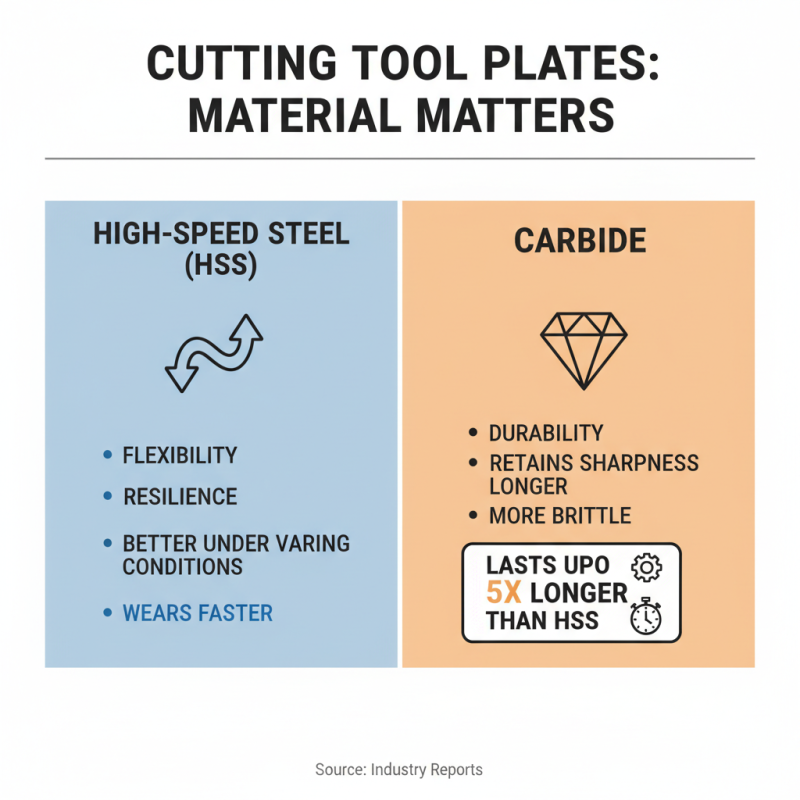
When it comes to precision manufacturing, the materials used in cutting tool plates play a crucial role. High-speed steel (HSS) and carbide are common choices. HSS offers flexibility and resilience, allowing for better performance in varying conditions. However, it may wear faster than alternatives. Carbide, though more brittle, excels in durability and retains sharpness longer. Industry reports suggest that carbide tools can last up to five times longer than HSS tools under similar conditions.

Another key material is ceramics. Ceramics can withstand high temperatures, making them ideal for tough materials. However, their brittleness makes them prone to chipping. The right balance between toughness and wear resistance is essential. The choice of material directly impacts performance, productivity, and cost. For instance, using the wrong cutter can increase machining time by 20%, leading to inefficiency.

Despite advances in technology, challenges remain. Choosing the ideal material may depend on the specific application, but data reveals that many manufacturers overlook this vital step. Opting for the best material tailored to individual needs is often not prioritized, affecting overall productivity. Continuous evaluation and adaptation of cutting tool plates are necessary for optimal results.

Precision Manufacturing: The Importance of Tolerance and Surface Finish

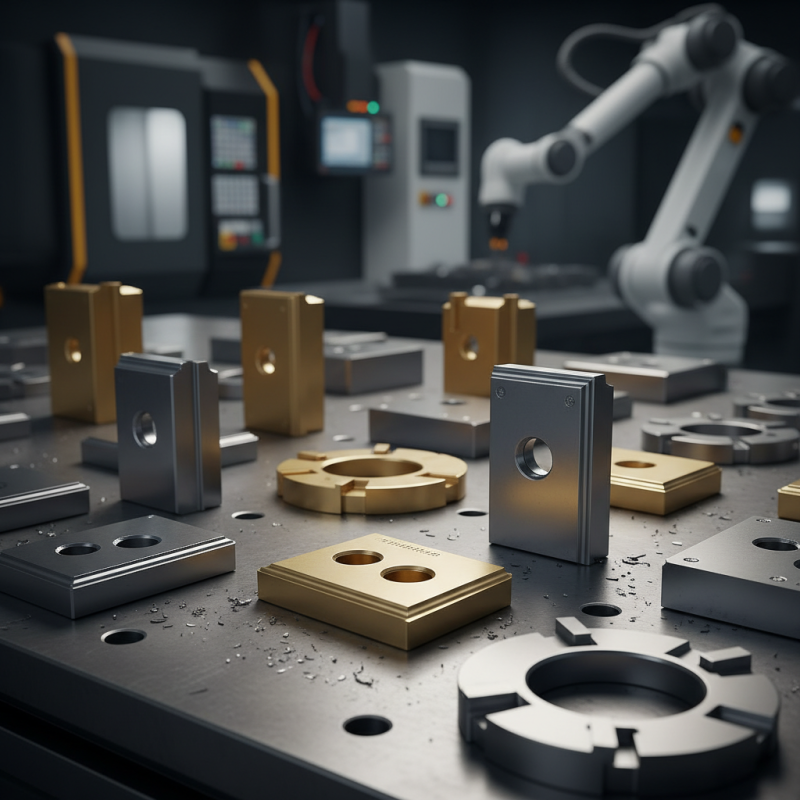
In precision manufacturing, every detail matters. Tolerance refers to the allowable deviation in a product’s dimensions. A small error can lead to significant issues. For example, a component might not fit. This situation can halt production. Adjusting a slight tolerance can save time and money.

Surface finish is equally crucial. A rough surface impacts friction and wear. Components may not perform as expected. Many overlook this aspect, thinking any finish would do. However, a smooth surface improves overall functionality. It also enhances the product’s longevity.

Mistakes often arise in achieving the right balance. Manufacturers sometimes focus too much on design or cost. They may cut corners, leading to poor quality. Reflecting on these practices is essential. Improved quality requires a commitment to all factors, including cutting tool plates. Precision in manufacturing is not just about meeting specifications; it’s about delivering reliability.

Precision Manufacturing: Tool Plate Material Impact on Surface Finish

This chart illustrates the relationship between different materials used for cutting tool plates and their impact on surface finish quality in precision manufacturing. The data shows the average surface roughness measured in micrometers (µm) for common tool plate materials.

Market Trends: Growth of Cutting Tool Plate Usage in Industries

The cutting tool plate market is experiencing significant growth across various industries. According to a recent report by Grand View Research, the global cutting tools market is projected to reach $211.3 billion by 2025, with a compound annual growth rate (CAGR) of 6.6%. This growth is largely driven by the increasing demand for precision manufacturing. As industries seek higher efficiency, the need for high-quality cutting tool plates has become more critical.

In the automotive and aerospace sectors, precision is non-negotiable. Manufacturers are now investing more in cutting tool technology to ensure improved machining processes. Research indicates that nearly 80% of manufacturers report enhancements in productivity when utilizing advanced cutting tool plates. However, the learning curve remains steep for many companies. Not all manufacturers have the resources to adopt these technologies.

Quality control is another area for reflection. While cutting tools are essential, not all plates deliver the expected performance. According to a study by Market Research Future, performance inconsistencies can lead to a 15% increase in production costs. Industries must be cautious and invest wisely in cutting tool plates—balancing cost and quality to avoid setbacks. As the sector evolves, continuous innovation and quality assurance will define the success of cutting tool plate utilization.

Case Studies: Cutting Tool Plate Impact on Efficiency and Cost Reduction

Cutting tool plates play a key role in precision manufacturing. Their design and materials directly influence machining efficiency. For instance, a case study showed that using advanced carbide plates reduced machining time by 20%. In this case, a company switched to these plates and noticed a significant drop in cycle times. The result? Increased production without extra labor costs.

Another example highlighted a metalworking shop that faced high tooling costs. They invested in high-quality cutting plates. The outcome was remarkable. Tool life increased by 30%, and part quality improved. However, the initial cost was higher. This decision required reflection on budgeting and long-term benefits versus short-term expenses.

Manufacturers must evaluate various factors when selecting cutting tool plates. Not all materials perform equally. The choice depends on the specific machining operations. Some shops might still cling to outdated methods. This can lead to inefficiencies and higher operational costs. Continuous assessment of tooling options is crucial for maintaining competitiveness.