Leave Your Message

2026 Best Polished Tungsten Plate Suppliers for Global Buyers

Global buyers need more than a supplier list when sourcing Polished Tungsten Plate in 2026. They need traceable materials, stable delivery, and evidence that technical claims are accurate. Tungsten is dense, hard, and difficult to machine. Small variations in thickness, flatness, or surface finish can affect shielding panels, high-temperature tooling, and precision components.

The U.S. Geological Survey’s Mineral Commodity Summaries 2025 estimated global tungsten mine production at approximately 81,000 metric tons in 2024. China accounted for most reported output, highlighting the importance of supply-chain diversification and careful supplier verification. The European Commission also identifies tungsten as a critical raw material, reflecting its industrial importance and supply-risk exposure. These reports do not guarantee any individual supplier’s performance. Buyers must still inspect the evidence.

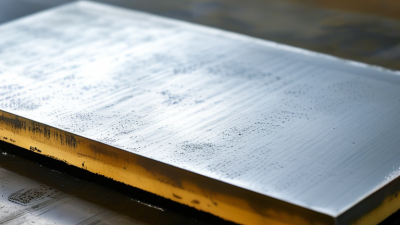
This 2026 guide evaluates Polished Tungsten Plate suppliers through practical purchasing criteria. These include chemical composition, density, dimensional tolerances, surface roughness, inspection records, packaging, and export experience. Supplier certifications matter. So do independent test reports and clear responses to technical questions. A polished surface should look uniform under direct light, without visible scratches, pits, or uneven grinding marks. That detail matters.

No ranking is perfect. Availability can change quickly. Regional logistics may also distort apparent pricing. For that reason, global buyers should compare multiple quotations, request samples, confirm ASTM or equivalent specifications, and review batch-level documentation before placing large orders. Reliable sourcing begins with evidence, not impressive wording.

2026 Best Polished Tungsten Plate Suppliers for Global Buyers

Tungsten Plate Fundamentals: 19.25 g/cm³ Density and 3,422°C Melting Point

Tungsten plate begins with two defining figures: 19.25 g/cm³ and a melting point of 3,422°C. These values explain its exceptional weight and thermal resistance.

A 100 × 100 × 1 mm plate contains about 10 cm³ of material, so its theoretical mass approaches 192.5 grams. That small plate feels surprisingly heavy in the hand.

The melting point matters in furnace parts, heat shields, and high-temperature tooling. However, it does not mean every tungsten plate performs equally at 3,422°C. Purity, grain structure, thickness, atmosphere, and mechanical stress can change service performance. Vacuum or controlled gas is often important, because oxidation can damage exposed tungsten at much lower temperatures.

A polished surface is not merely decorative. It can reduce roughness, support accurate contact, and reveal scratches, pits, or grinding marks during inspection. Yet a bright face may hide internal defects. Buyers should request material certificates, measured dimensions, density data, surface roughness values, and independent inspection records where risks are high. I would also check flatness after polishing, since thin plates can distort during processing. One detail is easy to overlook: density may fall below the theoretical value when porosity or impurities remain. Reliable suppliers should explain that difference clearly, not simply repeat a specification sheet.

Grade Benchmarks: ≥99.95% W, Density, and Controlled Grain Size

Global buyers comparing polished tungsten plates should begin with chemistry, not shine. A bright surface proves little. Request a certificate showing at least ≥99.95% W by mass, with impurity limits for molybdenum, iron, nickel, and carbon. Ask whether results come from the finished lot or a general product sheet. Traceable heat numbers make that answer more credible.

Density is a practical cross-check. Near 19.25 g/cm³ suggests strong tungsten content, but the method matters. Dimensions, surface pores, machining loss, and measurement temperature can distort simple calculations. Require the test method, sample location, and tolerance. Check the lot. Do not accept one rounded number. For precision assemblies, compare measured density with the agreed specification, then inspect a retained sample.

Controlled grain size affects polishing, edge stability, and performance during heating or cutting. Ask for metallographic images, grain-size data, and orientation information when the application requires it. Uniform grains are useful. However, a polished face can hide subsurface variation. One practical lesson is easy to miss: visual inspection cannot replace cross-sectional evidence. Reliable suppliers explain powder preparation, sintering conditions, inspection frequency, and rejection criteria clearly. Still, specifications need review. A technically strong plate can fail if flatness, thickness, or protective packaging is overlooked.

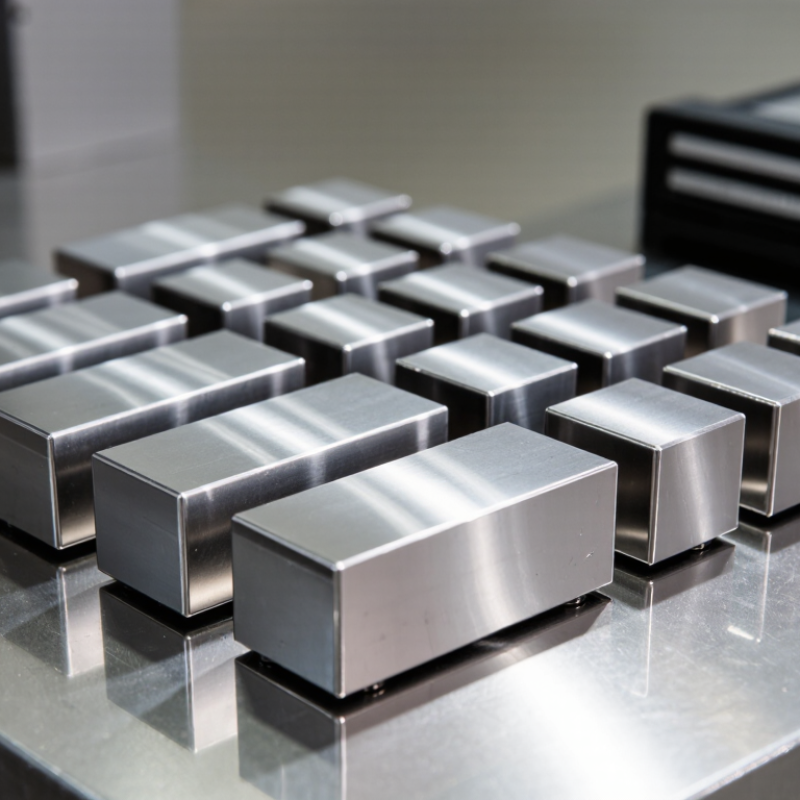
Polish Verification: Ra ≤0.8 µm, Flatness Tolerances, and Edge Quality

For global buyers, polished tungsten plate quality starts with measurable evidence, not a bright appearance. Request a Ra value of 0.8 µm or lower, measured with a calibrated stylus instrument. ISO 21920-2 emphasizes defined measurement conditions, including cutoff length, evaluation length, and sampling direction. Those details matter because tungsten can show different readings across grinding lines.

Flatness needs equal attention. A supplier should state the tolerance in millimeters per plate length, rather than using vague terms such as “precision flat.” Ask for inspection results taken on a certified surface table, with the plate free from clamping stress. ASTM B760 covers tungsten and tungsten alloy plate requirements, but it does not automatically define every buyer’s polishing acceptance limit. That gap requires a written purchase specification. Small oversight, big consequence.

Edge quality is practical evidence of process control. Inspectors should check burrs, chipped corners, sharp transitions, and inconsistent chamfers under controlled lighting. A clean edge protects handling equipment and reduces local stress during assembly. The USGS Mineral Commodity Summaries 2024 estimated global tungsten mine production at about 81,000 metric tons in 2023, showing the scale of this strategic material supply chain. Yet volume does not prove surface quality. I would request sample plates, raw measurement files, calibration dates, and photographs of all four edges. One limitation remains: Ra alone cannot reveal waviness, embedded abrasive particles, or subsurface damage. Suppliers should therefore pair Ra data with flatness maps and documented visual inspection criteria.

Supplier Verification: ASTM B760, ISO 9001, Traceability, and Lot Testing

For global buyers, polished tungsten plate selection begins with evidence, not a bright surface. A supplier should provide an ASTM B760 compliance statement for each applicable product. Ask which edition, dimensions, chemistry limits, and inspection methods were used. Polishing can hide edge cracks, waviness, or grinding marks. Request close-up photographs and measured flatness data. Small details matter.

ISO 9001 certification supports process control, but it does not automatically prove plate quality. Check certificate scope, issuing body, validity, and manufacturing location. Then review the quality plan. It should define incoming powder controls, sintering records, machining stages, final inspection, and nonconformance handling. During supplier reviews, I look for linked records rather than polished promises. One missing signature may reveal a weak handoff. That deserves questions.

Traceability should follow every plate from raw material lot to packing label. Lot numbers must match mill records, test reports, and invoices. For critical orders, require lot testing for chemical composition, density, dimensions, surface condition, and specified mechanical properties. Independent testing can confirm disputed results. Keep retained samples when practical. Even strong systems fail occasionally. A supplier that explains deviations clearly may be more reliable than one claiming perfection. Buyers should document acceptance criteria before ordering, because vague requirements create avoidable disputes after shipment.

2026 Best Polished Tungsten Plate Suppliers for Global Buyers

Supplier Verification: ASTM B760, ISO 9001, Traceability, and Lot Testing

How to Read This Chart

The chart represents four evidence categories that global buyers commonly request during tungsten plate supplier qualification. Each category has a value of 1 because it is a required verification checkpoint in this review framework, not a company performance score. Buyers should confirm ASTM B760 applicability, review a valid ISO 9001 certificate, verify heat or lot traceability, and request lot-specific test reports before purchase.

Global Buyer Selection: MOQ, Lead Time, Incoterms, and Total Landed Cost

2026 Best Polished Tungsten Plate Suppliers for Global Buyers

Global Buyer Selection: MOQ, Lead Time, Incoterms, and Total Landed Cost

For global buyers, selecting a polished tungsten plate supplier in 2026 requires more than comparing unit prices. MOQ often changes the real buying decision. A low MOQ can reduce inventory pressure, while a higher MOQ may secure better processing efficiency. Ask whether MOQ applies per thickness, size, finish, or purchase order. Request recent inspection records, material certificates, density data, and surface photographs. Polished surfaces should be checked for scratches, pits, edge damage, and flatness.

Lead time must include drawing approval, raw material preparation, machining, polishing, inspection, and export packing. Suppliers should state production days separately from transit days. This detail prevents unrealistic project schedules. I would also confirm whether the quoted date starts after deposit or technical approval. It sounds minor. It is not.

Incoterms then define responsibility for freight, insurance, customs clearance, and risk transfer. Compare FCA, FOB, CIF, and DDP only when included services are clearly written. DDP may simplify delivery, but local taxes and import obligations still need verification.

Total landed cost includes the plate price, tooling, packaging, freight, insurance, duties, taxes, inspection fees, bank charges, and possible rework. Use the same specification when comparing offers. Otherwise, a cheaper quote may hide weaker tolerance control or packaging. No quotation is perfect. Currency changes, port congestion, and rejected inspection lots can alter the final cost. Build a small contingency and review every assumption before issuing a purchase order.