Leave Your Message

Top 10 Types of Face Milling Cutters?

Face milling can leave a broad, even surface—or produce chatter, burrs, and wasted inserts. The difference often starts with the cutter. A Face Milling Cutter is not one universal tool; designs vary in insert shape, cutting angle, diameter, and intended operation. Some suit general-purpose work, while others target high-feed machining, fine finishing, or tougher materials.

This guide introduces ten common types and explains what each is designed to do. You will encounter cutters with 45-degree or 90-degree lead angles, round inserts, shell-style bodies, and indexable designs. Each has trade-offs. A 45-degree cutter can spread cutting forces, while a 90-degree option may help create a square shoulder. Those results still depend on the setup.

Material, machine rigidity, spindle power, and workholding all matter. A large cutter may cover more surface per pass, but it can also demand more from a modest machine. Insert geometry and grade affect chip formation and tool life. So does the feed rate. Small details matter.

For example, a cutter that runs smoothly across a steel plate may not be the right choice for a thin, flexible part. The best selection comes from matching the tool to the job, then checking the manufacturer’s recommendations and testing carefully. Not always obvious. This overview offers practical comparisons, not a single “best” answer for every shop.

Top 10 Types of Face Milling Cutters?

What Face Milling Cutters Do in a Machining Process

Face milling cutters create broad, flat surfaces by rotating cutting edges across a workpiece. They remove material in shallow passes, leaving a face ready for inspection or another machining operation. Cutter bodies may use replaceable inserts or solid cutting edges. Insert shape, cutter diameter, and approach angle affect cutting forces, chip flow, and finish.

In practice, a machinist matches the cutter to the machine’s power, workpiece material, and required surface quality. A cutter that is too large can strain a modest setup; poor chip evacuation can leave scratches or heat marks. Small details matter.

The U.S. Department of Energy’s 2015 Bandwidth Study places manufacturing energy use at roughly one-quarter of U.S. energy consumption. That is a sector-wide estimate, not a face-milling measurement, but it puts efficient machining in context.

Stable engagement and sensible cutting conditions can reduce wasted passes. Yet a smooth face alone does not prove the process was efficient; tool wear and hidden chatter deserve attention, too.

How Face Milling Cutters Are Designed and Classified

Face milling cutters are designed around the workpiece, machine rigidity, and the finish required. Their body holds cutting edges at a controlled angle, while insert shape and rake influence chip flow and cutting forces. Small details matter. A cutter with a positive rake can cut freely in softer materials; a negative-rake design often offers stronger edges for demanding cuts.

Common classifications include standard face mills, high-feed cutters, square-shoulder cutters, round-insert cutters, shell mills, indexable cutters, solid-carbide cutters, positive-rake cutters, negative-rake cutters, and fine-pitch cutters. These labels describe overlapping design features, not ten exclusive families. For example, an indexable shell mill may also use round inserts and a fine tooth pitch.

To choose a cutter, consider how many teeth engage at once, how securely the workpiece is held, and where chips can escape. Coarse-pitch bodies leave more room for chips, while fine-pitch designs place more edges in the cut. On a rigid setup, that can support a smoother finish. In practice, the result may still vary with tool overhang, insert condition, and feed. Real cuts are less tidy. A small vibration mark on a milled surface can reveal that the setup, not just the cutter geometry, needs attention.

The 10 Main Types of Face Milling Cutters

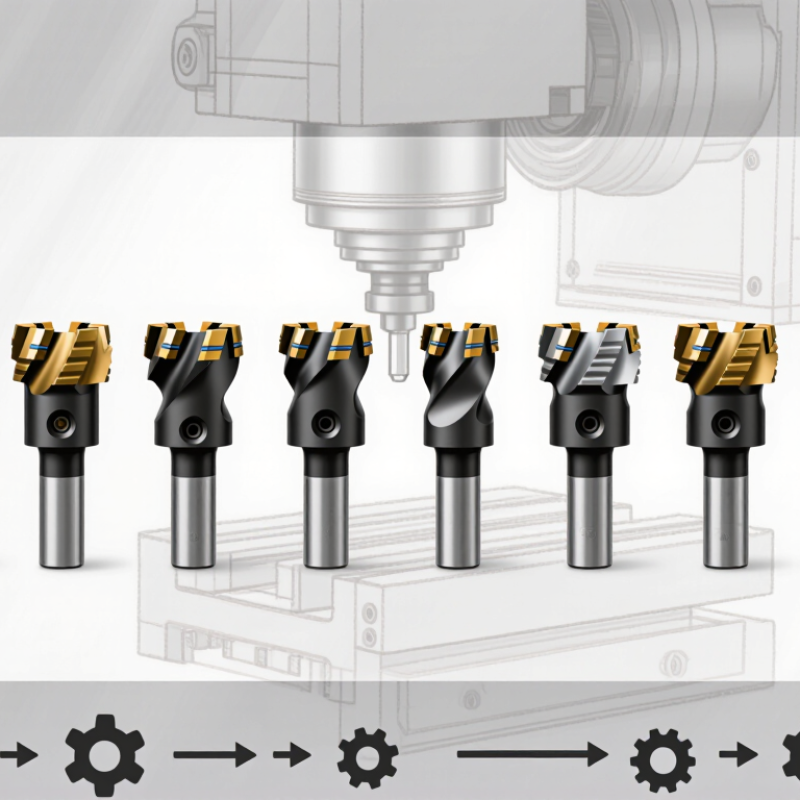
The 10 main types of face milling cutters vary by geometry, construction, and finish. A standard 45-degree face mill handles general stock removal and spreads cutting forces across the insert. A 90-degree shoulder mill leaves a near-square edge. High-feed cutters use shallow depths and fast feed rates. Round-insert cutters suit curved surfaces and interrupted cuts. Shell mills mount on an arbor and cover wider areas.

Construction and finish create other useful categories. Solid-carbide face mills suit smaller, precise work, while indexable face mills allow individual inserts to be replaced. Wiper-insert cutters use a finishing edge to improve surface texture. Dedicated finishing face mills prioritize smooth results over heavy cutting. Fly cutters use a single cutting point and can produce a broad, clean surface, though they are often slower. These categories can overlap; a shell mill, for example, may also be indexable. There is no universal winner.

Tips: Match cutter diameter to the machine’s power and workpiece width. Check insert shape, cutting speed, and setup rigidity before machining. Listen for chatter. A slight adjustment to feed or overhang can change the finish, and the first choice may not be ideal.

How Cutter Types Suit Different Materials and Operations

Face milling cutters suit materials and operations in different ways. A 45-degree cutter is a versatile choice for general face milling, with a smooth entry that can reduce impact on the cutting edge. A 90-degree shoulder mill leaves a square edge, but its insert geometry and machine rigidity matter. High-feed cutters work well with shallow cuts and fast table movement. Round-insert cutters spread cutting forces across a curved edge, making them useful for roughing tough alloys.

For aluminum, sharp, polished inserts and open chip spaces help prevent built-up material. Steel often benefits from tougher carbide grades and a steady feed. Cast iron produces abrasive dust, so wear-resistant edges and effective chip control are important. Shell mills can cover broad surfaces efficiently, while smaller indexable cutters suit limited setups. The chart recommendation is only a starting point; actual results depend on spindle power, workholding, and insert geometry. Not always obvious.

Tips: Match cutter diameter to the spindle and workpiece width. Check chip shape and surface finish after a short test pass. If vibration appears, reduce overhang or adjust feed before changing several settings at once.

Factors to Consider When Selecting a Face Milling Cutter

Top 10 Types of Face Milling Cutters?
Factors to Consider When Selecting a Face Milling Cutter

Choosing a face milling cutter starts with the workpiece material and the finish you need. Aluminum, steel, and cast iron respond differently to cutting edges, speeds, and heat. Check the machine’s spindle power, rigidity, and available tool diameter before selecting a cutter. A large cutter may cover more surface per pass, but it can chatter on a light or flexible setup. Tooth count matters, too: more teeth can improve finish, while fewer teeth leave more space for chip removal.

Tips: Match the insert geometry to the material, and confirm the cutter’s maximum speed. Measure twice. Check that the workpiece is clamped firmly, with no overhanging edge likely to vibrate. A short test cut can reveal chatter or uneven insert loading before you commit to a full pass.

Think about cutting depth and width alongside production volume. For heavy stock removal, prioritize a cutter and setup that handle the load without excessive vibration. For a visible finishing surface, stable cutting and suitable inserts often matter more than simply increasing feed. Inspect edges after the first pass; uneven wear may point to runout, poor alignment, or a weak fixture. There is no perfect cutter for every job. It is easy to overlook how much the machine and workholding affect the result.

Top 10 Types of Face Milling Cutters

A practical comparison of common cutter designs by their typical suitability for roughing. Ratings are qualitative guides based on common design intent, not measured performance; several types can overlap.

When selecting a cutter, consider: workpiece material, machine rigidity and power, required surface finish, depth of cut, insert geometry and grade, cutter diameter, and chip evacuation. Check the cutter and insert manufacturer’s recommendations for operating conditions.