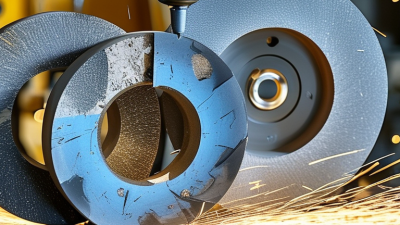
Choosing the China best Solid Carbide Disc Plate supplier requires more than comparing prices or polished product photos. Buyers need reliable materials, stable dimensions, and evidence of consistent manufacturing. A qualified supplier should explain carbide grades, cobalt content, hardness ranges, disc thickness, and grinding tolerances in clear technical language. These details affect cutting performance, wear resistance, edge stability, and service life.
Look closely at production experience. A dependable manufacturer should provide material certificates, inspection records, sample measurements, and realistic delivery information. Ask how the Solid Carbide Disc Plate is pressed, sintered, ground, and checked before shipment. Even small variations can matter when discs operate at high speed or face abrasive materials. Practical support also matters. Engineers should help match the disc to the application instead of recommending one grade for every customer.
The strongest supplier is not always the largest.
Factory audits, customer references, and transparent communication can reveal more than advertising. A supplier that admits a limitation may deserve greater trust than one promising perfect results. This point is easy to overlook. Specifications should be confirmed through samples and documented testing, not assumptions. Buyers should also review packaging, traceability, quality control procedures, and after-sales response. This guide examines the qualities that define a dependable Chinese supplier and offers a practical framework for making a safer, evidence-based purchasing decision.
China Best Solid Carbide Disc Plate Supplier?
Understanding Solid Carbide Disc Plates and Their Industrial Applications
Solid carbide disc plates combine tungsten carbide particles with a metallic binder, commonly cobalt. This structure provides high hardness, wear resistance, and stable cutting performance. According to the U.S. Geological Survey’s Mineral Commodity Summaries 2024, global tungsten mine production reached about 84,000 metric tons in 2023. That supply supports tooling, mining, machining, and wear-resistant component production.
In factories, carbide discs work in rotary slitting, wood processing, powder compaction, wire drawing, and material shearing. Their performance depends on more than hardness. Grain size, binder content, edge geometry, surface finish, and operating temperature all matter. A finer grade may create a sharper edge, while a tougher grade can tolerate impact better. Small differences become obvious beside a high-speed cutting line.
A reliable supplier should provide grade data, dimensional tolerances, hardness values, and inspection records. The International Tungsten Industry Association highlights recycling as an important part of tungsten supply security, especially for used hardmetal products. However, longer service life is not automatic. Excessive clamping force, poor alignment, or sudden cooling can crack a disc. One assumption deserves challenge: the hardest plate is not always the best plate. Application testing remains necessary, and supplier recommendations should explain both strengths and limitations.
China Best Solid Carbide Disc Plate Supplier?
Key Factors for Choosing a Chinese Solid Carbide Disc Plate Supplier
China remains a major tungsten source. The USGS Mineral Commodity Summaries 2024 estimated China produced 63,000 metric tons of tungsten in 2023, nearly four-fifths of global output. This supply depth can support competitive carbide disc plate pricing. However, cheap material is not automatically reliable.
Check the supplier’s carbide grade, cobalt content, density, hardness, and transverse rupture strength. These values should match your cutting pressure and wear conditions. The International Tungsten Industry Association reports that cemented carbide consumes about 60% of global tungsten use. That figure shows the sector’s scale, but it does not guarantee consistent quality. Ask for recent batch certificates, not only a general product sheet. Inspect disc edges under magnification. Small chips can become serious cracks during high-speed use.
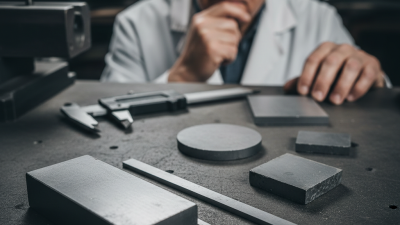
Dimensional control matters too. Confirm diameter tolerance, thickness tolerance, flatness, surface finish, and center-hole accuracy. A capable factory should provide inspection records and traceable batch numbers. Request samples from normal production, not specially prepared pieces. This point is often missed. Compare sample results with independent laboratory testing when the application is critical. Also review tungsten powder sourcing, sintering controls, packaging, and delivery records. ISO 9001 certification helps, but it cannot replace actual inspection data. I would remain cautious about unusually low quotations, because hidden rework and unstable batches may cost more later.
| Evaluation Factor | Recommended Benchmark | Why It Matters | Evidence to Request | Suggested Weight |
|---|---|---|---|---|
| Tungsten Carbide Grade | WC grain size and binder content should match the application; common cobalt binder ranges are approximately 6%–15% by mass. | Grain size and cobalt content influence hardness, toughness, wear resistance, and resistance to edge chipping. | Material certificate, grade designation, chemical composition, and application recommendations. | 15% |
| Hardness | Typical cemented-carbide hardness is approximately 1,300–2,000 HV30, depending on grade and binder content. | Higher hardness generally improves abrasion resistance, while excessive hardness can reduce impact toughness. | Independent or in-house hardness test report using a stated test method and load. | 10% |
| Transverse Rupture Strength | A typical range is approximately 1,500–3,000 MPa, depending on carbide grain size, porosity, and cobalt content. | Higher transverse rupture strength helps the disc resist cracking and breakage under bending or impact loads. | Batch test data, quality standard, sample dimensions, and test method. | 10% |
| Dimensional Tolerance | For precision-ground parts, request a tolerance proposal based on the drawing; thickness tolerances of ±0.02 mm are commonly achievable for suitable sizes and processes. | Accurate dimensions reduce assembly problems, vibration, uneven wear, and downstream machining costs. | Inspection report showing diameter, thickness, hole size, chamfer, and other drawing dimensions. | 15% |
| Flatness and Parallelism | For precision applications, specify measurable limits rather than accepting a general “high precision” claim; a flatness target around 0.02–0.05 mm may be suitable depending on disc size. | Low flatness and parallelism errors support stable clamping, uniform contact, and consistent cutting or forming performance. | Surface-plate inspection records, measurement equipment details, and a first-article report. | 12% |
| Surface Finish | Ground surfaces may achieve approximately Ra 0.2–0.8 µm, depending on material condition, geometry, and grinding process. | A suitable surface finish improves contact behavior, reduces friction, and helps prevent stress-concentration defects. | Surface-roughness report, sample photographs, and definition of which surfaces are ground or polished. | 8% |
| Porosity and Metallurgical Quality | Request compliance with ISO 4505 or an equivalent carbide porosity and structural-quality classification. | Porosity, free carbon, and inclusions can reduce strength and cause premature cracking or chipping. | Metallographic images, quality classification, sintering records, and batch traceability. | 10% |
| Manufacturing Process | A controlled process should include powder preparation, pressing, vacuum or sinter-HIP processing, grinding, cleaning, and final inspection. | Process control directly affects density, dimensional stability, internal defects, and repeatability between batches. | Process flow chart, equipment list, inspection plan, and calibration records. | 8% |
| Quality Management | An ISO 9001-certified quality system is a useful baseline; certification should be current and applicable to the manufacturing site. | A documented quality system improves corrective-action control, traceability, inspection consistency, and complaint handling. | Valid certificate, certificate scope, audit records, nonconformance procedure, and lot-traceability example. | 5% |
| Sample and First-Article Capability | The supplier should provide samples made with the intended material grade and production process before mass production. | Testing production-equivalent samples reduces the risk of discovering dimensional or performance problems after order placement. | Sample inspection report, material certificate, dimensional report, and approved drawing revision. | 3% |
| Lead Time and Production Capacity | Typical sample lead times may be about 7–20 working days; repeat production orders often require approximately 20–45 working days, depending on geometry and quantity. | Reliable planning helps avoid production interruptions and allows realistic inventory and delivery scheduling. | Written production schedule, capacity statement, order milestones, and delivery-performance records. | 2% |
| Packaging and Export Documentation | Parts should be protected from impact, moisture, and contamination, with clear lot identification and complete commercial documentation. | Proper packaging reduces transit damage and simplifies receiving inspection, customs clearance, and traceability. | Packaging specification, carton and part labels, commercial invoice, packing list, and origin documentation. | 2% |

Choosing a China-based solid carbide disc plate supplier requires evidence, not polished sales language. Material quality begins with tungsten carbide powder, cobalt content, grain size, density, and magnetic saturation. Ask for batch-level test results, not only a general inspection certificate.
ISO 4499 methods help assess carbide microstructure, while ISO 3327 supports transverse rupture strength testing. These details reveal whether a plate can resist chipping under repeated cutting loads.
Manufacturing control matters just as much. Powder mixing, pressing, sintering, grinding, and edge finishing should follow documented procedures.
Dimensional reports should show thickness, flatness, diameter, and surface roughness. A supplier certified to ISO 9001 demonstrates a quality system, but certification alone proves little about every carbide batch. The ISO Survey 2022 recorded more than 1.2 million ISO 9001 certificates worldwide, so the certificate is common, not exceptional. Verify its scope, issuing body, and validity.
Reliable suppliers should also provide traceability from powder lot to finished plate. Request calibration records for hardness testers and coordinate measuring equipment. Environmental and worker-safety systems, such as ISO 14001 and ISO 45001, add useful evidence.
However, documents can still hide weak process discipline. I would compare three production batches, inspect cutting edges under magnification, and repeat hardness testing independently. That extra step feels inconvenient. It may prevent an expensive mistake. Ask for nonconforming-product records too; a supplier claiming zero defects deserves careful questions.
China Best Solid Carbide Disc Plate Supplier?
Choosing a solid carbide disc plate supplier requires more than comparing quotations. Customization should cover diameter, thickness, hole design, carbide grade, grain size, and surface finish. Ask for tolerance records, material certificates, and sample inspection data. A professional supplier should explain flatness and runout limits clearly. The U.S. Geological Survey’s Mineral Commodity Summaries 2024 identifies tungsten as a critical mineral, so material traceability deserves serious attention. Small specification changes can affect tool life and machining stability.
Pricing must include more than the unit cost. Compare tooling fees, inspection charges, packaging, shipping, and replacement policies. Grand View Research’s 2024 tungsten carbide market analysis expects continued market growth through 2030, but raw material pressure can still create unstable quotations. Lead times should be divided into sample approval, production, inspection, and dispatch. A realistic supplier may offer 7–15 days for standard items and longer for complex custom plates. Fast delivery sounds attractive. It may also hide weak inspection.
Tips: Request one pilot batch. Check hardness, dimensions, edge condition, and surface finish before volume production. Customer support matters after delivery. Look for prompt technical replies, corrective-action reports, and accessible batch records. ISO 9001:2015 certification supports process control, but certification alone proves little. Ask for recent inspection examples. My imperfect rule is simple: choose evidence over polished promises.
Selecting a Chinese solid carbide disc plate supplier requires more than comparing prices. The USGS Mineral Commodity Summaries 2024 reported China produced about 67,000 metric tons of tungsten in 2023, nearly 80% of global mine output. This scale supports strong supply capacity, but it does not guarantee consistent plate quality.
Use a practical, step-by-step check. Request the carbide grade, tungsten carbide grain size, cobalt content, density, hardness, and transverse rupture strength. Match these values with your cutting speed and working material.
Ask for dimensional tolerances, flatness records, and a recent batch inspection report. A certificate alone is not enough. Test samples through an independent laboratory when failure costs are high.
Inspect the production process remotely or in person. Look for powder mixing records, sintering controls, grinding equipment, and lot traceability. Confirm whether the supplier can maintain the same edge geometry across repeated orders.
Check packaging, delivery history, export documents, and technical response time. The International Trade Centre’s trade data can help compare shipment patterns, but shipment volume is only supporting evidence. I would calculate total landed cost, including grinding, inspection, freight, and rejected parts. Cheap plates can become expensive quickly.
One detail is easy to miss: ask how the supplier handles dimensional deviations after final grinding. I have seen technically correct certificates fail to explain real production variation. A small trial order, measured against your drawings, reveals more than a long sales presentation.