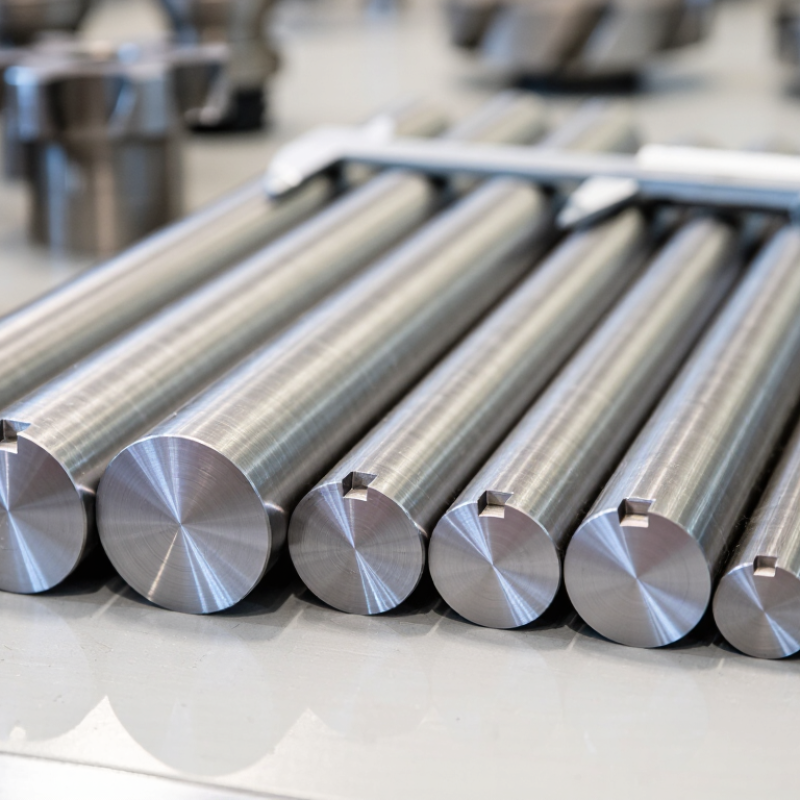
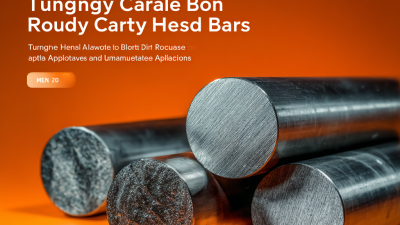
Why Choose Tungsten Carbide Round Bars? The answer begins with demanding working conditions. These bars combine exceptional hardness, wear resistance, and dimensional stability. They are commonly used for cutting tools, wear components, forming dies, and precision tooling. In abrasive environments, ordinary steel may develop grooves quickly. Tungsten Carbide Round Bars can retain a sharp edge and resist surface damage for much longer.
Dr. G. S. Upadhyaya, a recognized cemented-carbide researcher, emphasized a practical principle: “Hardness alone is not enough; toughness must support it.” This insight remains important when selecting carbide grades. A bar with extreme hardness may perform poorly under impact. A tougher grade may survive vibration better, yet wear faster. The right choice depends on load, cutting speed, coolant, workpiece material, and edge geometry.
Small details matter. A polished bar should show a consistent surface, without visible pits or chipped edges. Grain size, cobalt content, straightness, and grinding quality also influence real performance. Ask for material certificates and measurable tolerances. Do not rely on hardness claims alone.
That is where selection becomes less simple. More hardness does not always mean longer service life. Poor brazing, excessive heat, or incorrect clearance can waste an expensive component. My experience with carbide applications suggests a careful trial remains valuable. Measure wear after a defined production cycle. Compare results against the current tool. Then adjust the grade, geometry, or operating conditions. Performance should be proven at the machine, not assumed from a catalogue.
Tungsten carbide round bars are cylindrical blanks made from tungsten carbide powder and a metallic binder, commonly cobalt or nickel. Through powder metallurgy, manufacturers press, sinter, and sometimes grind the material to precise diameters. The result is not ordinary steel. It offers high hardness, strong wear resistance, and useful compressive strength.
These bars commonly serve as blanks for drills, end mills, reamers, and wear components. A 10 mm bar can become a cutting tool after grinding its flutes and cutting edges. In workshop use, carbide can hold an edge against abrasive alloys and composite materials longer than many tool steels. However, hardness brings brittleness. A sudden impact, poor clamping, or excessive vibration can chip the edge. It is tough, but not indestructible.
Material selection should match the real application. Grain size, binder percentage, straightness, diameter tolerance, and surface condition all affect performance. Fine-grain grades often support sharper edges, while coarser grades may handle impact better. Ask for inspection data, such as hardness, density, and dimensional reports. That evidence matters more than a polished product description. A common practical lesson is simple: hardness alone does not guarantee success. Heat, coolant choice, feed rate, and machine rigidity also deserve attention. The best round bar may be the wrong choice for a rushed process.
Tungsten carbide round bars are built for severe contact, abrasion, and repeated cutting loads. Their hardness helps resist scratching and edge deformation when machining steel, cast iron, or composite materials. That matters in drills, end mills, wear pins, and forming tools used through long production cycles. In practical shop work, a sharp carbide edge can remain consistent after many passes.
Their durability comes from a dense carbide structure held by a metallic binder. Fine grains improve hardness, while suitable binder content adds toughness against sudden impact. High compressive strength supports stable performance under heavy pressure, where ordinary tool steel may deform. They also keep useful stiffness at elevated temperatures, although excessive heat can still damage an edge. Corrosion behavior varies with composition, coolant exposure, and surface condition.
Choosing the right grade requires more than selecting the hardest option. A very hard bar may chip when vibration, interrupted cuts, or poor alignment enter the process. Workshop results often improve after reducing runout and controlling feed rates. That practical detail is easy to overlook. Grinding also demands diamond abrasives and careful cooling, because careless handling can create tiny cracks. No carbide bar is indestructible; service life depends on grade selection, tool geometry, setup, and maintenance.
Why Choose Tungsten Carbide Round Bars?
How Do They Perform in Demanding Industrial Applications?
In demanding machining environments, tungsten carbide round bars resist wear far better than conventional tool steels. Their high hardness helps cutting edges stay sharp during long production runs. This matters when machining abrasive alloys, cast iron, or fiber-reinforced materials. Less edge loss can improve dimensional consistency and reduce tool changes.
The performance is practical, not magical. A properly selected bar can handle high cutting speeds and repeated contact with hard workpieces. Its stiffness also limits tool deflection, especially in small-diameter drills and milling cutters. On the shop floor, this often produces cleaner holes and more predictable surface finishes. Heat resistance helps, too. However, poor cooling can still damage the cutting edge.
Carbide remains brittle under sudden impact. A dropped tool, excessive runout, or interrupted cut may cause chipping or fracture. This weakness is easy to underestimate. Grade selection, grain structure, edge preparation, and holder accuracy all affect service life. Operators should match the bar to the material, feed rate, and cutting depth rather than rely on hardness alone. Some applications need toughness more than maximum wear resistance. That trade-off deserves careful testing.
Inspection also matters. Small cracks, uneven grinding, or poor brazing can shorten performance before production begins. Measuring runout and checking the finished edge can reveal problems early. In harsh environments, reliability comes from both material quality and disciplined process control.
Why Choose Tungsten Carbide Round Bars?
What Factors Should Guide Your Material Selection?
Selecting a tungsten carbide round bar should begin with the working conditions, not its impressive hardness. What will the bar actually face? Cutting loads, abrasion, impact, heat, or repeated vibration? A material that performs well in a dry machining setup may fail in a shock-heavy application. I have seen overly hard grades chip when operators ignored intermittent loading. Hardness alone is not enough.
Grade selection depends on carbide grain size and binder content. Fine grains usually support sharper edges and greater wear resistance. Coarser grains often provide better toughness under impact. The binder level also changes strength, hardness, and corrosion behavior. Check the manufacturer’s tested data, including transverse rupture strength and hardness ranges. Small variations can matter.
Dimensions require equal attention. Confirm the diameter, straightness, roundness, and surface finish before ordering. Tight tolerances can reduce grinding time, but they may increase material cost. Consider the final tool design, coolant exposure, operating temperature, and available grinding equipment. Some users choose the hardest option, then discover that finishing takes too long. That choice needs reconsideration. A balanced grade may deliver more reliable production, even when its headline hardness looks less impressive. Evaluate samples under real cutting conditions before committing to a larger quantity.
| Selection Factor | Typical Tungsten Carbide Round-Bar Performance | Why It Matters Compared with Conventional Tool Steels | Material-Selection Guidance |
|---|---|---|---|
| Hardness | Approximately 88–94 HRA, depending on cobalt content, grain size, and grade | Significantly harder than common high-speed steels, which are generally around 62–70 HRC after heat treatment | Choose a harder, finer-grained grade for abrasive materials and high wear. Avoid selecting the maximum hardness automatically if impact loading is severe. |
| Wear Resistance | Very high, especially in abrasive and sliding-contact applications | Maintains cutting and forming performance longer than many steel alternatives when exposed to mineral particles, glass fiber, ceramics, or powdered metals | Prioritize tungsten carbide for dies, punches, wear pins, reamers, end mills, and other parts where dimensional stability is critical. |
| Compressive Strength | Common grades can exceed 4,000 MPa in compressive strength | Excellent resistance to plastic deformation under concentrated loads and high contact pressure | A strong choice for cold-forming tools, precision punches, bearing components, and high-pressure wear parts. |
| Transverse Rupture Strength | Typically about 1,500–3,000 MPa, depending on grade and microstructure | Higher cobalt content generally improves toughness and transverse strength, while lower cobalt content usually increases hardness and wear resistance | Use tougher grades for interrupted cuts, vibration, shock, and less rigid machines. Use harder grades for stable, highly abrasive cutting conditions. |
| Fracture Toughness | Often approximately 7–20 MPa·m1/2, depending on composition and grain size | Lower than most tool steels, so carbide is more sensitive to impact, edge chipping, and poor tool support | Select carbide when wear dominates over impact. Provide rigid fixturing, adequate edge support, and suitable cutting parameters. |
| Elastic Modulus | Approximately 500–700 GPa | Roughly two to three times the stiffness of steel, helping resist bending and deflection | Useful for slender tooling, precision gauges, wear pins, and components where geometric accuracy must be maintained under load. |
| Density | Approximately 14.5–15.5 g/cm3 | About twice the density of steel, resulting in greater mass for the same volume | Consider weight during machine acceleration, robotic handling, balancing, and tool-change design. The higher mass may be beneficial for vibration damping in some applications. |
| Thermal Conductivity | Commonly about 50–110 W/(m·K), varying with binder content and grade | Can transfer heat efficiently away from the cutting zone, although the tool-workpiece interface may still reach high temperatures | Combine the material choice with proper coolant, coating, speed, feed, and chip-control decisions, especially when machining heat-resistant alloys. |
| Maximum Service Temperature | Suitable for elevated-temperature tooling, but properties depend on grade, atmosphere, and load | Hardness decreases at high temperature; oxidation and binder-related effects can limit performance in extreme heat | For continuous high-temperature exposure, verify hot-hardness data and oxidation resistance rather than relying only on room-temperature hardness. |
| Dimensional Stability | Very low elastic and thermal deformation compared with many steels | Helps preserve hole size, edge geometry, and surface consistency over extended production runs | Select precision-ground or centerless-ground bars when tool concentricity, straightness, and repeatable finished dimensions are important. |
| Machinability and Processing | Difficult to machine with conventional cutting tools; commonly shaped by grinding, electrical-discharge machining, or laser processing | Requires more specialized processing than hardened or annealed tool steel | Account for grinding time, diamond tooling, EDM requirements, tolerances, and possible post-processing before confirming total manufacturing cost. |
| Corrosion Resistance | Generally better than plain carbon steel but not inherently corrosion-proof | The carbide phase is relatively stable, while the metallic binder may corrode in moisture, acids, or aggressive chemicals | For wet or chemically aggressive service, evaluate binder type, protective coatings, cleaning procedures, and storage conditions. |
| Recommended Application Conditions | Best for high wear, high compression, precision, and long-duty-cycle applications | Less suitable where severe impact, bending, abrupt temperature changes, or poor support are unavoidable | Choose tungsten carbide round bars when reduced wear and stable geometry justify higher material and processing costs. Choose tougher steel when impact resistance and easy fabrication are the primary requirements. |
| Sustainability and Recyclability | Can be collected and recycled as a tungsten-containing hardmetal material | Recycling can recover valuable tungsten and reduce the need for primary raw materials | Separate used carbide from mixed scrap streams and confirm local recycling requirements to improve material recovery and lifecycle value. |

Note: Values are representative ranges for cemented tungsten carbide and vary with tungsten carbide grain size, metallic binder content, porosity, manufacturing method, and grade. Always confirm the supplier’s technical data for the intended application.
Tungsten carbide round bars combine high hardness with strong wear resistance. That makes them useful for drills, end mills, and wear components. The U.S. Geological Survey reported about 84,000 metric tons of tungsten mine production worldwide in 2023. This figure reflects tungsten’s continuing industrial importance, but it does not guarantee unlimited tool life.
The U.S. Geological Survey reported about 84,000 metric tons of tungsten mine production worldwide in 2023.
Correct application matters more than hardness alone. Select the grade according to material, cutting speed, and impact risk. A tougher grade suits interrupted cuts, while a harder grade may perform better in stable, abrasive machining. Keep tool runout extremely low. Even slight misalignment can concentrate stress along the cutting edge. Use steady coolant flow, especially when heat builds near the tip. Thermal shock remains a common cause of cracking.
Avoid sudden contact with the workpiece. Secure clamping is essential. Inspect the bar for tiny chips before each operation. ISO 3685 recommends controlled tool-life testing, yet workshop conditions rarely remain perfect. That is worth admitting. Record cutting speed, feed, coolant condition, and wear after each trial. Then adjust one variable at a time. Overly aggressive settings may save minutes today but shorten service life dramatically. Gentle starts help. Clean storage also prevents edge damage before the tool reaches the machine.