Leave Your Message

2026 Best Carbide Blank Rods for Global Buyers?

Choosing the right Carbide Blank Rods in 2026 requires more than comparing prices on a supplier website. Global buyers must examine grain size, cobalt content, transverse rupture strength, straightness, surface finish, and internal porosity. These details affect tool life, grinding efficiency, and production stability. A rod that looks flawless under warehouse lighting may still contain hidden defects.

Dr. Hans-Jürgen Wirth, a respected cemented-carbide researcher, once emphasized, “Material consistency is the foundation of predictable tool performance.” His point remains practical today. Buyers should request batch certificates, dimensional tolerances, inspection records, and clear information about raw-material traceability. Supplier experience also matters. A manufacturer should explain how each grade performs in drills, end mills, reamers, or wear components.

Small details matter.

For global procurement teams, logistics can be equally important. Protective packaging, moisture control, export documentation, and dependable delivery schedules reduce avoidable risk. Regional availability may lower freight costs, but it should not replace technical verification. Some suppliers publish impressive specifications without explaining test methods. That deserves careful questioning.

This guide compares leading Carbide Blank Rods for global buyers in 2026. It considers performance, consistency, customization, certification, and total purchasing value. No ranking is perfect. Application conditions vary, and even a premium grade may disappoint when selected incorrectly. Buyers should treat this guide as a decision framework, not a shortcut. The strongest choice is usually the rod that matches the cutting material, operating speed, coolant conditions, and quality controls of the intended application.

2026 Best Carbide Blank Rods for Global Buyers?

What Are Carbide Blank Rods and Why Do Global Buyers Need Them?

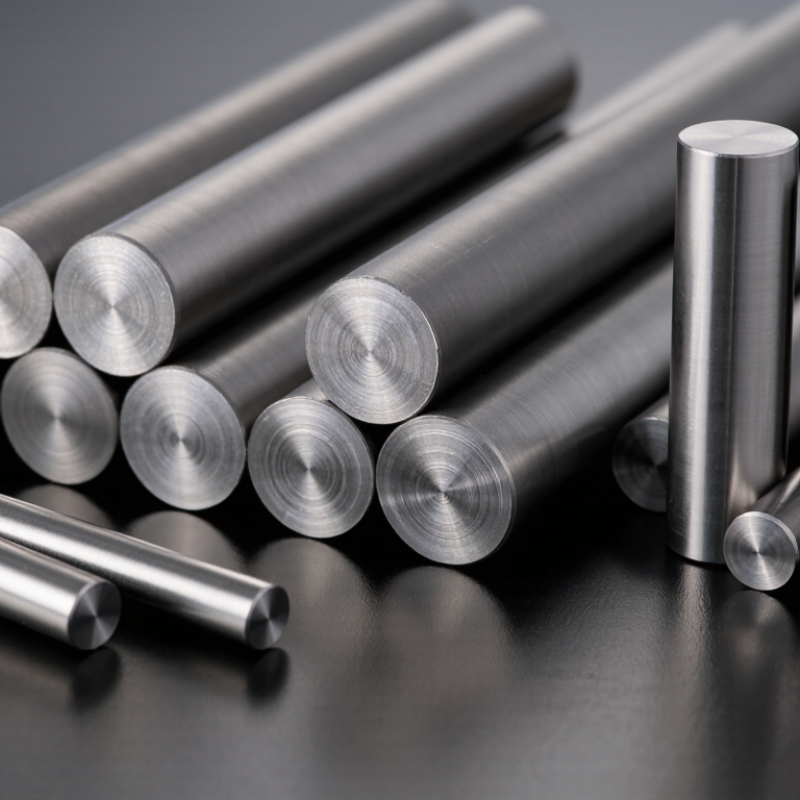
Carbide blank rods are unfinished cylindrical bars made from cemented carbide, usually carbide powder bonded with a metallic binder. They are ground, cut, and shaped into drills, end mills, reamers, and other precision tools. A blank rod is not a finished tool. That distinction matters.

Global buyers need them because they can produce tools closer to their own machine requirements. A workshop in Germany, India, or Brazil may need different diameters, flute designs, and cutting angles. Consistent blanks help control tool accuracy, hardness, and service life. The small details matter. A 0.02-millimeter diameter variation can affect grinding results and final tool balance.

Purchasing teams should check carbide grade, grain size, binder content, straightness, diameter tolerance, and surface condition. Harder grades often improve wear resistance, while tougher grades may better resist edge chipping. There is no perfect grade. This is where buyers sometimes make mistakes by choosing hardness alone. Material certificates, inspection records, and batch traceability provide stronger evidence than catalog claims. Samples should be tested under actual cutting conditions, including the planned workpiece and coolant. Packaging also deserves attention, because chipped ends can create hidden losses during long-distance transport. A reliable supplier should explain tolerances clearly and respond when results fall outside the agreed range.

How to Compare Carbide Grades, Dimensions, Tolerances, and Performance

2026 Best Carbide Blank Rods for Global Buyers?

Choosing carbide blank rods requires more than comparing hardness numbers. Experienced buyers examine carbide grade, grain size, cobalt content, density, and transverse rupture strength together. A fine-grain grade may support sharp cutting edges, while a tougher grade can resist chipping during interrupted machining. The best choice depends on tool diameter, workpiece material, cutting speed, and coolant conditions. One grade cannot solve every application.

Dimensions and tolerances often decide whether a blank rod reaches production smoothly. Check diameter, length, straightness, chamfer size, and surface finish on the inspection report. Common diameter tolerances may include h5 or h6, but buyers should confirm the actual specification before ordering. A 0.02 mm variation can affect tool runout and grinding allowance. Measure twice. Small errors become expensive later.

Performance also depends on internal quality and process control. Ask for batch traceability, density records, hardness data, and ultrasonic inspection when suitable. Packaging should protect rods from impact, moisture, and mixed-lot confusion during international transport. In my experience, suppliers sometimes describe tolerances clearly but provide limited evidence. That gap deserves attention. I once accepted a promising trial lot without checking straightness across the full length; grinding revealed uneven stock removal. It was a simple oversight, but it changed how I review technical documents. Price still matters, yet repeatability, inspection credibility, and stable delivery usually matter more.

2026 Best Carbide Blank Rods for Global Buyers — Comparing Carbide Grades, Dimensions, Tolerances, and Performance
Typical Grade Family Nominal Cobalt Typical WC Grain Size Density Hardness Transverse Rupture Strength Recommended Machining Duty Performance Profile Common Blank-Rod Dimensions Typical Ground Diameter Tolerance Typical Length Tolerance Buyer Selection Priority
Ultra-fine K01–K05 6–8 wt% 0.2–0.5 μm 14.4–14.9 g/cm³ 92.5–94.0 HRA 2,000–2,800 MPa Finishing carbide drills, micro-drills, small end mills, printed-circuit-board tools Very high wear resistance and edge sharpness; best for stable, low-vibration cutting. More sensitive to heavy interrupted impact. Ø0.5–Ø20 mm × 30–330 mm h5: 0/−0.006 mm for Ø3–6 mm; h6: 0/−0.008 mm for Ø6–10 mm ±0.5–1.0 mm Choose for miniature tools, abrasive work materials, and maximum wear life.
K10–K15 8–10 wt% 0.4–0.8 μm 14.1–14.7 g/cm³ 91.0–93.5 HRA 2,200–3,000 MPa General-purpose solid-carbide drills, reamers, end mills, and engraving tools Balanced hardness, strength, and wear resistance; a widely suitable choice for steel, cast iron, non-ferrous alloys, and composites. Ø1–Ø25 mm × 30–330 mm h5: 0/−0.006 to 0/−0.013 mm, depending on diameter ±0.5–1.0 mm Choose as the default grade when workpiece material and cutting conditions vary.
K20–K30 10–12 wt% 0.6–1.0 μm 13.9–14.5 g/cm³ 90.0–92.5 HRA 2,500–3,300 MPa Roughing end mills, general drilling, interrupted cuts, and medium-strength steels Higher toughness than fine-grain grades, with good resistance to chipping and vibration. Wear resistance is moderately lower. Ø2–Ø30 mm × 30–330 mm h5 or h6; typically 0/−0.010 to 0/−0.020 mm ±0.5–1.5 mm Choose for mixed cutting loads, interrupted machining, and production versatility.
K30–K40 12–15 wt% 0.8–1.3 μm 13.5–14.2 g/cm³ 88.5–91.5 HRA 2,700–3,600 MPa Heavy roughing, long-overhang tools, difficult-to-machine alloys, and unstable setups High fracture toughness and impact resistance; suitable where edge failure is a greater risk than gradual wear. Ø3–Ø32 mm × 30–330 mm h6: typically 0/−0.010 to 0/−0.025 mm ±1.0–2.0 mm Choose for shock loading, vibration, large tool diameters, and aggressive roughing.
Fine-grain P10–P20 8–10 wt% 0.4–0.8 μm 14.1–14.7 g/cm³ 91.0–93.5 HRA 2,200–3,000 MPa Stainless steels, alloy steels, pre-hardened steels, and general milling applications Good edge strength and corrosion-resistant-workpiece performance; cutting parameters must control heat and work hardening. Ø2–Ø25 mm × 30–330 mm h5 or h6; typically 0/−0.006 to 0/−0.020 mm ±0.5–1.5 mm Choose when machining stainless or alloy steel requires a strong, wear-resistant edge.
S10–S20 8–12 wt% 0.4–0.8 μm 13.9–14.7 g/cm³ 90.5–93.5 HRA 2,300–3,200 MPa Titanium, nickel-based alloys, cobalt alloys, and heat-resistant superalloys Designed for high-temperature cutting and difficult chip evacuation; toughness and thermal stability are prioritized. Ø2–Ø25 mm × 30–330 mm h5 or h6; typically 0/−0.006 to 0/−0.020 mm ±0.5–1.5 mm Choose for aerospace-type heat-resistant alloys and low-speed, high-load cutting.
N10–N20 6–10 wt% 0.4–0.8 μm 14.1–14.9 g/cm³ 91.5–94.0 HRA 2,000–2,900 MPa Aluminum, copper, brass, graphite, plastics, wood, and composite materials High hardness and sharp cutting capability; polished or chip-grooved surfaces help reduce built-up edge and material adhesion. Ø1–Ø25 mm × 30–330 mm h5 or h6; typically 0/−0.006 to 0/−0.020 mm ±0.5–1.5 mm Choose for non-ferrous materials where low adhesion and clean surface finish are important.
Submicron K05–K10 8–10 wt% 0.3–0.5 μm 14.2–14.8 g/cm³ 92.0–94.0 HRA 2,100–2,900 MPa High-speed finishing tools, small-diameter cutters, hardened steel finishing, and precision slotting Combines high hardness with improved edge strength compared with conventional ultrafine grades; requires rigid toolholding and controlled runout. Ø1–Ø16 mm × 30–200 mm h5: 0/−0.006 to 0/−0.010 mm ±0.5–1.0 mm Choose for precision tools where diameter consistency, low runout, and surface finish are critical.
Technical note: Values are representative production ranges for sintered tungsten-carbide/cobalt rods and are intended for supplier comparison. Actual properties vary with cobalt distribution, carbon balance, grain-growth control, sintering process, rod diameter, and inspection method. Confirm the supplier’s certificate for density, hardness, transverse rupture strength, magnetic saturation, porosity, straightness, surface condition, and dimensional tolerances before purchase. ISO 286 fit symbols such as h5 and h6 describe the upper and lower dimensional deviation of the finished ground diameter; they do not replace a buyer-specific drawing or inspection specification.

Which Carbide Blank Rod Features Matter for Different Applications?

2026 Best Carbide Blank Rods for Global Buyers

Carbide blank rod features should match the cutting task, not just the catalog description. For solid carbide drills and end mills, fine grain structure usually supports sharper edges and better wear resistance. Higher cobalt content can improve toughness during interrupted cutting, but it may reduce hardness. The balance matters.

Diameter tolerance affects tool accuracy, especially in automated grinding. Check straightness, roundness, surface finish, and length consistency before ordering. Coolant holes help deep drilling by improving chip evacuation and temperature control. They are useful, but not always necessary for short tools. For abrasive materials, prioritize wear resistance and stable hardness. For stainless steel, toughness can prevent sudden edge failure. In my experience, buyers often focus on grade numbers and overlook runout. That mistake can become expensive.

Tips: Request inspection data for each production batch. Confirm the tolerance standard, hole position, and usable length. Ask for samples before placing a large order. A clean surface is valuable, but visual quality alone proves little. Also review packaging for moisture protection during international transport. One specification may fit many applications poorly. Recheck your assumptions.

How to Evaluate Suppliers, Quality Control, Pricing, and Certifications

2026 Best Carbide Blank Rods for Global Buyers?

Choosing carbide blank rods requires more than comparing a supplier’s lowest quotation. Experienced buyers request samples, production records, and clear material specifications. Check cobalt content, grain size, density, hardness, transverse rupture strength, diameter tolerance, and straightness. A polished surface should show no visible cracks, pits, or grinding burns. Small defects can become expensive tool failures.

Supplier reliability appears in details. Ask whether each batch has heat-treatment records, inspection reports, and traceable lot numbers. Confirm that measuring equipment is regularly calibrated. A factory audit, video inspection, or independent pre-shipment test can reveal process gaps. I once trusted a neat sample more than the inspection data. That was careless. Samples can be specially selected.

Pricing should include more than the unit cost. Compare minimum order quantities, packaging, tooling charges, shipping terms, payment conditions, and rejection handling. Request a written tolerance agreement before production starts. Certifications such as ISO 9001 can indicate controlled processes, but they do not prove perfect rod quality. Check certificate scope, issuing body, and validity. Depending on the destination, environmental declarations and restricted-substance compliance documents may also matter. Paperwork helps, yet physical testing remains necessary.

What Should Buyers Check Before Ordering and Importing Carbide Rods?

2026 Best Carbide Blank Rods for Global Buyers?

Before ordering carbide blank rods, define the cutting application in measurable terms. State the required diameter, length, tolerance, grain size, cobalt content, hardness, and transverse rupture strength. Not just price. A rod for micro-drills may need different performance from one used in heavy milling. Ask for recent inspection data from the actual production lot. Generic certificates are less useful than traceable records. Confirm whether the supplier controls straightness, surface finish, porosity, and edge damage. Small defects can become cracks after grinding.

Request samples before approving a large shipment. Measure diameter at several points with calibrated equipment. Check the surface under bright, angled light. It may reveal pits, stains, or grinding marks. Ask how the rods are cleaned, dried, and packed. Moisture-resistant tubes and shock protection matter during long transport. The packing list should match the quantities, sizes, and lot numbers. Also verify the commercial invoice, certificate of origin, tariff classification, and delivery terms with your customs broker. Import rules differ between countries and can change.

A dependable supplier should explain its powder process, sintering controls, and quality checks without vague promises. Factory experience helps, but documented evidence matters more. Consider an independent pre-shipment inspection for valuable orders. It adds cost. It can prevent expensive rework. Do not assume every “premium” grade suits your machine. Trial results may expose poor coolant compatibility or unexpected chipping. Leave room for correction in the purchase specification, because the first version is rarely perfect.